
The Connectional System Explained
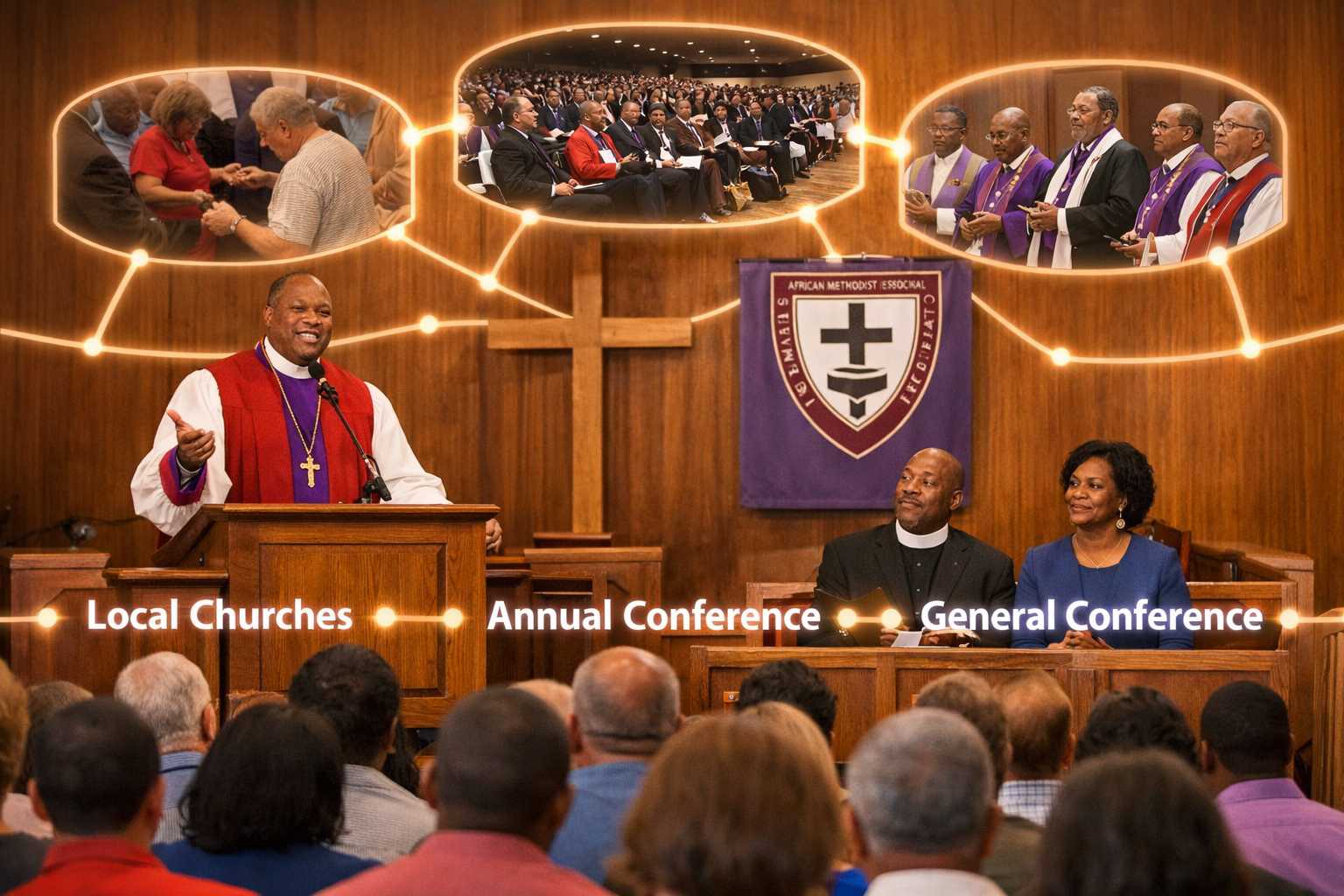
The Connectional System is the backbone of the African Methodist Episcopal (AME) Church and the wider Methodist tradition. It explains how churches stay united, how leaders serve together, and how members share responsibility.
If you have ever asked:
- Why does the church work this way?
- Who makes decisions?
- How do local churches stay connected?
This article gives clear answers. You will learn what the Connectional System is, why it exists, and how it helps church members live their faith together. This guide is practical, accurate, and rooted in church history.
What Is the Connectional System?
The Connectional System is a church governance structure where local congregations, pastors, bishops, and church bodies work together as one united body.
Instead of churches acting alone, the system creates shared leadership, shared resources, and shared mission.
Core Definition
The Connectional System means:
- Churches are linked, not independent
- Authority is shared, not centralized
- Decisions are made through councils and conferences
This structure comes from John Wesley, the founder of Methodism, and remains central to the AME Church governance model today.
Why the Connectional System Exists
The Connectional System exists to protect unity, fairness, and accountability.
Key Purposes
- Unity of belief and mission
- Equal voice for clergy and laity
- Shared responsibility for ministry
- Protection against abuse of power
This system helped the African Methodist Episcopal Church survive racism, exclusion, and injustice after its founding in 1816.
Historical Roots of the Connectional System
The Connectional System did not start by accident.
Methodist Origins
- John Wesley organized Methodists into societies and conferences
- Leaders met regularly to pray, plan, and decide together
- No single church stood alone
AME Church Formation
The AME Church adopted the Connectional System to ensure:
- Black churches had self-governance
- Leadership stayed accountable
- Members shared authority
This structure allowed the AME Church to grow into a global denomination.
How the Connectional System Works
Local Church Level
Each local church:
- Elects leaders
- Manages daily ministry
- Sends delegates to conferences
Local churches do not act independently.
Presiding Elder District
Churches are grouped into Presiding Elder Districts for:
- Support
- Oversight
- Training
Annual Conference
The Annual Conference:
- Assigns pastors
- Reviews ministry work
- Handles discipline and policy
Both clergy and lay members vote.
General Conference
The General Conference is the highest authority.
It:
- Meets every four years
- Sets doctrine and church law
- Elects bishops
This shared system ensures balance and accountability.
Who Leads in the Connectional System?
Bishops
- Provide spiritual leadership
- Assign pastors
- Guard doctrine
Bishops serve the church, not rule over it.
Pastors
- Lead local congregations
- Teach doctrine
- Care for members
Pastors remain accountable to the Annual Conference.
Laity
- Vote in conferences
- Serve on boards
- Shape the church’s direction
The role of laity in the AME Church is essential, not optional.
Why the Connectional System Builds Trust
The Connectional System builds trust because:
- No one leader holds all power
- Decisions require group agreement
- Rules apply to everyone
This structure reflects biblical principles such as:
- Shared leadership (Acts 15)
- Mutual accountability (1 Corinthians 12)
Benefits of the Connectional System
For Church Members
- Clear structure
- Fair leadership
- Consistent teaching
For Local Churches
- Financial support
- Shared resources
- Trained leadership
For the Denomination
- Unity across regions
- Strong mission focus
- Long-term stability
Common Misunderstandings About the Connectional System
“It limits local freedom”
False. Local churches manage daily ministry while staying connected.
“Bishops control everything”
False. Authority flows through conferences and shared votes.
“Members have no voice”
False. The Connectional System values lay participation.
The Connectional System includes shared financial responsibility.
Funds support:
- Schools and colleges
- Missions
- Retired clergy
- Disaster relief
This model ensures no church stands alone in crisis.
Connectional Education and Member Training
Resources like Member’s Class 102: A Manual for African Methodist Episcopal Church Members help members:
- Understand church structure
- Learn doctrine
- Serve effectively
Education strengthens the Connectional identity of every member.
Why the Connectional System Still Matters Today
The Connectional System remains relevant because it:
- Protects unity
- Promotes fairness
- Encourages service
Churches with a clear structure last longer and serve better.
FAQs About the Connectional System
1. What denomination uses the Connectional System?
The African Methodist Episcopal Church and other Methodist bodies use this system.
2. Is the Connectional System biblical?
Yes. Shared leadership and group decision-making appear throughout the New Testament.
3. Do local churches own their property?
In many Methodist traditions, property is held in trust for the denomination.
4. Can members vote in church decisions?
Yes. Lay members vote in conferences and serve on boards.
5. Why is the General Conference important?
It sets doctrine, elects bishops, and governs the entire church.
Key Facts That Support the Connectional System
- The AME Church was founded in 1816
- The General Conference meets every four years
- Lay and clergy delegates share equal voting power
- The structure has supported growth across five continents
These facts show the system works over time.
Want to understand your church better and serve with confidence?
📘 Read Member’s Class 102
💬 Leave a comment with your question
📥 Share this article with a new church member
The Connectional System works best when members understand it.
Your knowledge strengthens the whole church.
Mary Vaughn
I'm Mary Venable Vaughn, born and raised in Indianapolis, Indiana. I founded Community & Faith Outreach Initiative in 2007 to help my community grow. Author of Members Class 102 and Stepping Into Discipleship. Married to Rev. Emmanuel J. Vaughn with four children.
0 Comments