


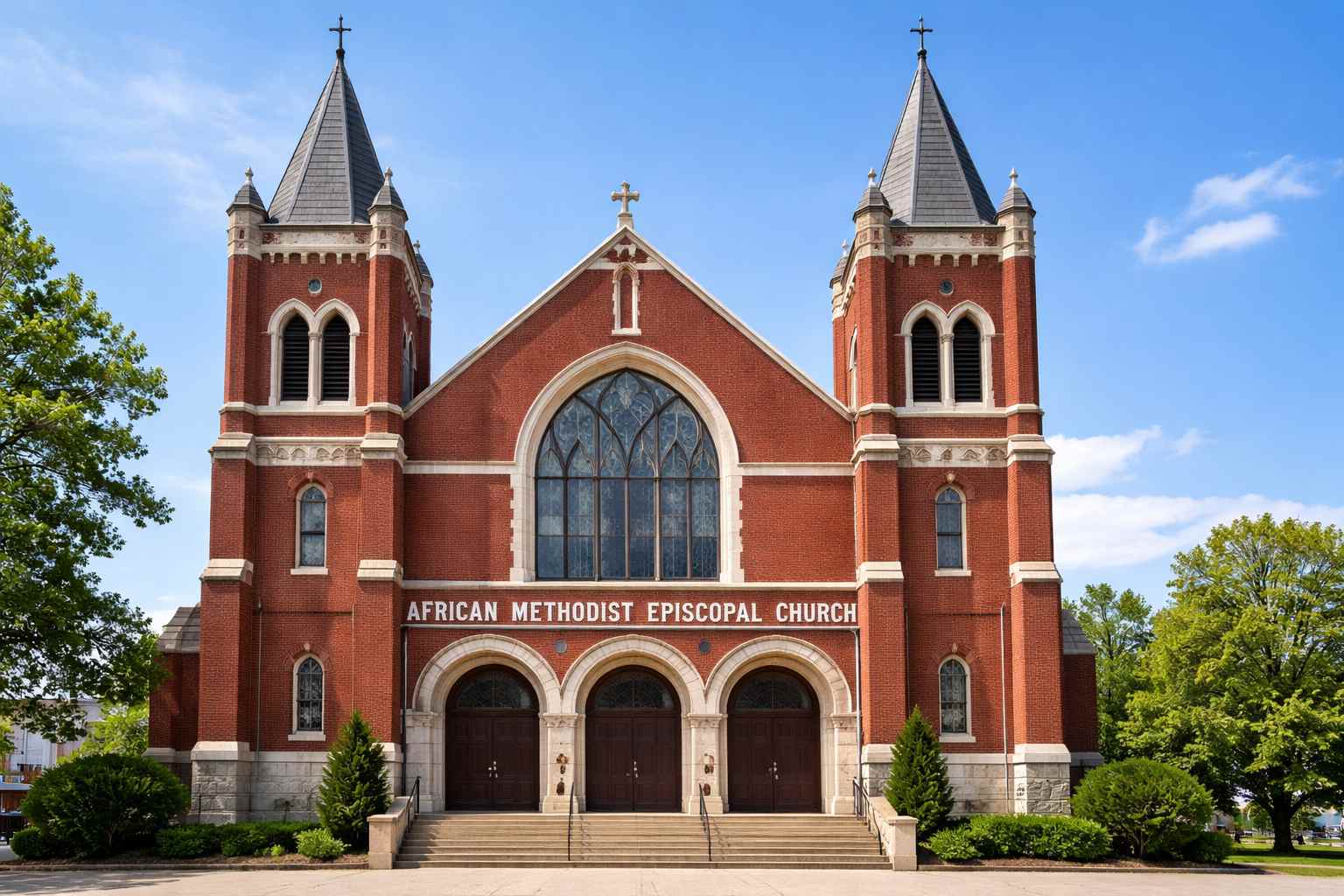
The African Methodist Episcopal Church (AME Church) has played a powerful role in American history. It began as a response to racial injustice in worship and grew into one of the most influential Black Christian denominations in the United States. Today, the growth of AME churches in America reflects faith, resilience, education, and community leadership.
This article serves as a Complete Guide to AME Church Beliefs, history, and impact. It explains how AME churches started, why they grew, where they are today, and what keeps them strong. If you want to understand the African Methodist Episcopal Church Doctrine, this guide gives you a clear and reliable foundation.
What Is the African Methodist Episcopal Church?
The African Methodist Episcopal Church is the first independent Protestant denomination founded by African Americans. It was established in 1816 in Philadelphia, Pennsylvania.
Key Founders and Early Leadership
- Richard Allen, a former enslaved man and Methodist preacher, founded the AME Church.
- He became the first AME bishop.
- The church was formed after Black worshippers faced discrimination in Methodist congregations.
From the beginning, the African Methodist Episcopal Church Doctrine emphasized:
- Christian faith rooted in Scripture
- Freedom from racial oppression
- Education, discipline, and self-governance
These beliefs are formally outlined in The Doctrine and Discipline of the African Methodist Episcopal Church, the official guide that governs faith, order, and practice.
Early Growth of AME Churches in the 19th Century
Expansion During Slavery
In the early 1800s, free Black communities in Northern states welcomed the AME Church. Congregations spread across:
- Pennsylvania
- New York
- New Jersey
- Maryland
AME churches provided safe worship spaces and clear teaching grounded in The Doctrine and Discipline of the African Methodist Episcopal tradition.
Role in the Abolition Movement
Many AME churches supported abolition. Ministers preached against slavery, and church members helped enslaved people escape through the Underground Railroad.
By 1860, the AME Church had more than 20,000 members, showing early and steady growth.
Rapid Growth After the Civil War
AME Churches in the Reconstruction Era
After slavery ended in 1865, millions of newly freed Black Americans sought:
- Churches
- Schools
- Moral leadership
AME congregations expanded rapidly across the South, especially in:
- Georgia
- South Carolina
- Alabama
- Mississippi
By 1880, membership exceeded 400,000, driven by clear doctrine and organized church instruction.
Education as a Growth Engine
Education played a key role in the growth of AME churches in America. The church founded schools and colleges to train ministers and educate communities.
Notable AME institutions include:
- Wilberforce University (Ohio)
- Allen University (South Carolina)
- Paul Quinn College (Texas)
These schools reinforced AME doctrine and leadership development.
Church Doctrine, Teaching, and Member Formation
Teaching the Faith
AME churches rely on structured teaching to help members understand beliefs, responsibilities, and church history. These teachings are rooted in the African Methodist Episcopal Church Doctrine and guided by the Doctrine and Discipline of the African Methodist Episcopal Church.
Many congregations use formal classes, such as Member’s Class 102, to deepen understanding of:
- AME beliefs
- Church governance
- Christian discipleship
These classes support long-term membership growth and spiritual maturity.
Contemporary Teaching Resources
Modern resources written by scholars and educators, including works by Mary Venable Vaughn, help members and leaders present AME teachings clearly and faithfully. These materials support churches seeking a Complete Guide to AME Church Beliefs that is accurate, accessible, and rooted in tradition.
The AME Church and Community Leadership
Church as a Social Anchor
AME churches have long served as centers for:
- Civic education
- Mutual aid
- Community organizing
Pastors often function as trusted leaders, reinforcing both faith and social responsibility.
Political Influence
During Reconstruction and beyond, AME clergy supported:
- Voting rights
- Equal education
- Fair labor laws
This leadership strengthened public trust and sustained church growth.
Growth During the Civil Rights Movement
During the 1950s and 1960s, AME churches supported:
- Voter registration efforts
- Peaceful protest movements
- Community education
Faith-based action, guided by the African Methodist Episcopal Church Doctrine, kept churches central to social change.
Modern Growth of AME Churches in America
Current Size and Reach
Today, the AME Church includes:
- Over 6,000 congregations
- More than 2 million members
- Churches in 39 countries
In the United States, AME churches remain strong in historic Black communities and urban centers.
Youth and Outreach
Many churches now focus on:
- Youth education
- Digital worship
- Community health programs
Structured teaching, including Member’s Class 102, continues to support engagement and retention.
Why AME Churches Continue to Grow
AME churches grow because they offer:
- Clear doctrine
- Strong leadership training
- A balance of faith and service
Grounding members in The Doctrine and Discipline of the African Methodist Episcopal Church provides consistency across generations.
Frequently Asked Questions (FAQs)
1. What guides AME beliefs and practices?
AME beliefs are governed by The Doctrine and Discipline of the African Methodist Episcopal Church.
2. What is Member’s Class 102?
Member’s Class 102 is a structured teaching class that helps members understand AME beliefs, history, and responsibilities.
3. Who provides modern AME teaching resources?
Educators and authors, including Mary Venable Vaughn, contribute materials that explain AME doctrine clearly.
4. Is there a complete guide to AME beliefs?
Yes. This article and official church publications together form a Complete Guide to AME Church Beliefs.
5. Is the AME Church still growing?
Yes. Growth continues through education, outreach, and faithful teaching.
Are you learning about the African Methodist Episcopal Church Doctrine or participating in a Member’s Class 102? Share your experience in the comments. For a deeper understanding, explore official AME teaching resources or attend a local class or service.
0 Comments