
Key Figures Who Shaped the AME Movement
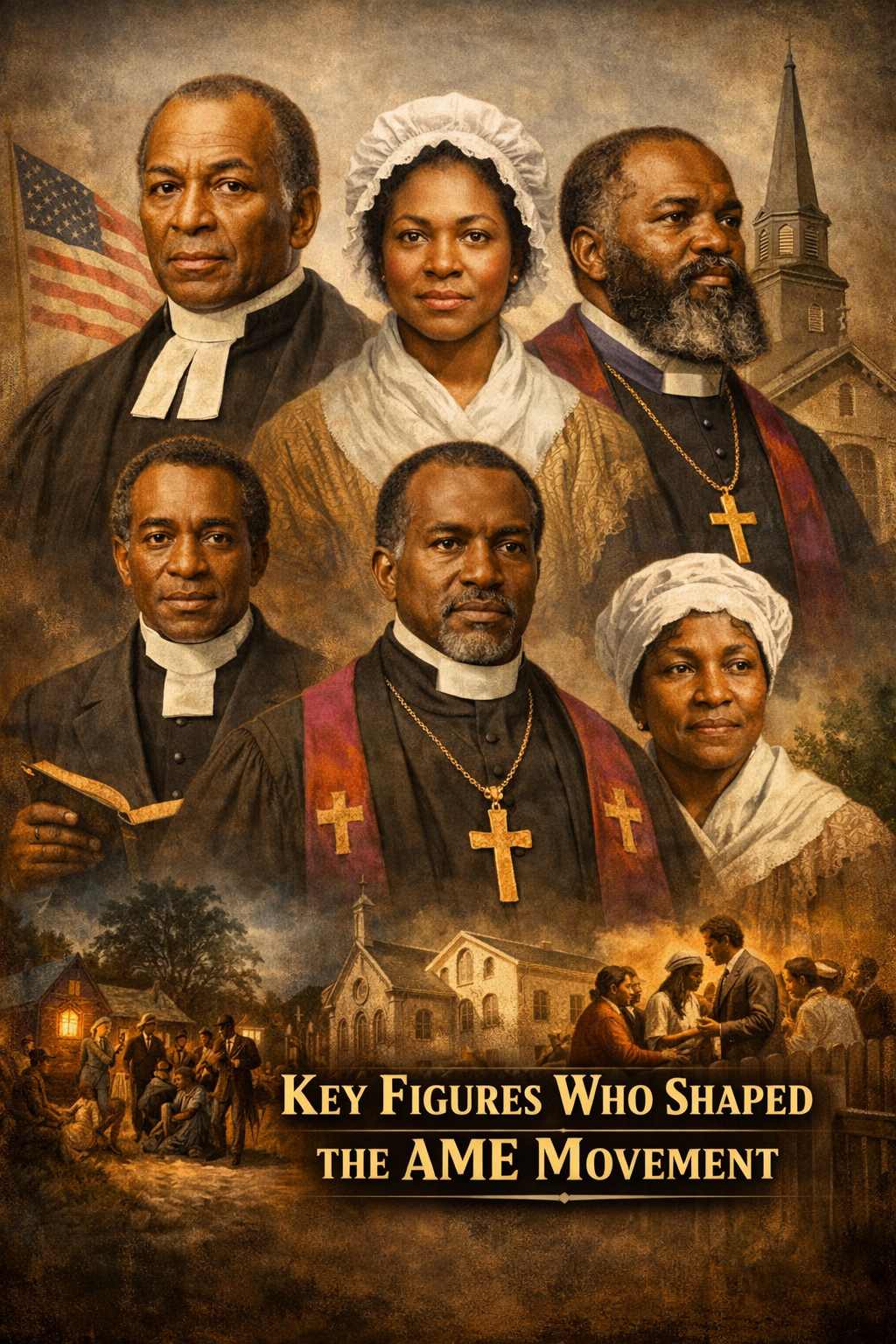
The African Methodist Episcopal Church (AME Church) did not begin as a large institution. It began as a response to injustice. Enslaved and free Black Christians faced discrimination inside Methodist churches in the United States. From this pain came action, leadership, and faith-driven courage.
This article explains who shaped the AME Movement, why their leadership mattered, and how their work still affects churches, education, civil rights, and social justice today. You will learn about the founders of the AME Church, key bishops, educators, activists, and reformers who turned faith into progress.
This guide is written to be clear, accurate, and useful. It is based on historical records, church archives, and well-documented scholarship. If you want to understand the roots of the AME Church history, this is the place to start.
The Birth of the African Methodist Episcopal Church
Richard Allen: Founder of the AME Church
Richard Allen is the most important figure in AME Church history.
- Born enslaved in 1760
- Purchased his freedom through hard work
- Became a Methodist preacher
In 1787, Allen and other Black worshippers were forced to leave St. George’s Methodist Church in Philadelphia because of segregation. This moment led directly to the creation of independent Black churches.
In 1816, Allen founded the African Methodist Episcopal Church, becoming its first bishop.
Why Richard Allen mattered:
- He created a church controlled by Black leadership
- He linked faith with education and civil rights
- He proved religious independence was possible
Early Leaders Who Built the AME Structure
Daniel Coker: Co-Founder and Abolitionist
Daniel Coker worked alongside Richard Allen in the early years of the AME Church.
- Born free in Maryland
- Educator and minister
- Early editor of AME publications
Coker helped write the church’s first doctrines and liturgy. He later became involved in missionary work in West Africa.
Jacob Tapisco: Expanding the Church
Jacob Tapisco served as a preacher and organizer in the early AME conferences. His work helped the church expand beyond Pennsylvania into other states.
His role shows that the AME Movement grew through teamwork, not one person alone.
Bishops Who Strengthened the AME Church
Morris Brown: Education and Stability
Bishop Morris Brown became the second bishop of the AME Church.
- Focused on church discipline
- Helped stabilize leadership
- Supported Black education
Morris Brown College in Atlanta later carried his name, showing his lasting impact.
Keywords: Morris Brown, AME bishop, Black education history
Henry McNeal Turner: Faith and Civil Rights
Henry McNeal Turner was one of the most outspoken AME bishops.
- Served as a U.S. Army chaplain
- Elected to the Georgia state legislature
- Advocate for Black political rights
Turner believed faith must support dignity and equality. His sermons openly challenged racism in government and churches.
Women Who Shaped the AME Movement
Jarena Lee: First Female AME Preacher
Jarena Lee broke barriers in the early 1800s.
- First authorized female preacher in the AME Church
- Traveled widely to preach
- Wrote one of the first spiritual autobiographies by a Black woman
Richard Allen at first denied her request to preach, then later approved it after witnessing her spiritual authority.
Why she mattered:
- Opened doors for women in ministry
- Challenged gender limits in church leadership
- Influenced future generations of women ministers
Sarah Allen: Organizer and Supporter
Sarah Allen, Richard Allen’s wife, played a critical role behind the scenes.
- Helped organize church gatherings
- Supported mutual aid societies
- Strengthened community care
Her work shows that leadership includes service, not only titles.
AME Leaders During Slavery and Reconstruction
Benjamin Tucker Tanner: Faith and Journalism
Benjamin T. Tanner served as a bishop and editor.
- Editor of AME Church Review
- Promoted education and theology
- Father of artist Henry Ossawa Tanner
He helped shape AME theology and public voice during Reconstruction.
AME Church and the Underground Railroad
Many AME ministers supported freedom seekers.
- Churches served as meeting points
- Pastors shared information
- Faith communities offered protection
While records are limited for safety reasons, historians confirm the AME Church played a role in abolition efforts.
The AME Church and Education
Founding Schools and Colleges
AME leaders believed education was key to freedom.
Institutions founded or supported by the AME Church include:
- Wilberforce University (1856)
- Morris Brown College
- Allen University
These schools trained teachers, ministers, and professionals during segregation.
The AME Movement in the 20th Century
AME Leaders in the Civil Rights Era
AME churches supported civil rights organizing.
- Hosted meetings
- Trained leaders
- Supported voter education
While Martin Luther King Jr. was Baptist, many local AME pastors worked alongside civil rights groups.
The AME Church continued its mission of faith-based justice.
Why These Figures Still Matter Today
The leaders of the AME Movement created:
- Independent Black leadership
- Safe worship spaces
- Education systems
- Community support networks
Their work shaped how churches engage with social issues today.
The AME Church now has over 2 million members worldwide, with congregations in the United States, Africa, the Caribbean, and Europe.
Frequently Asked Questions (FAQs)
1. Who founded the African Methodist Episcopal Church?
Richard Allen founded the AME Church in 1816 after facing racial discrimination in Methodist churches.
2. Why was the AME Church created?
It was created to allow Black Christians to worship freely without segregation or control by white church leaders.
3. Who was the first woman preacher in the AME Church?
Jarena Lee was the first authorized female preacher in the AME Church.
4. Did the AME Church support abolition?
Yes. Many AME leaders supported abolition and assisted freedom efforts through churches and networks.
5. Is the AME Church still active today?
Yes. The African Methodist Episcopal Church remains active worldwide in worship, education, and community service.
A Legacy of Faith and Action
The key figures who shaped the AME Movement did more than build churches. They built hope, leadership, and independence during times of deep injustice.
Their legacy lives on in:
- Black religious freedom
- Education systems
- Community leadership
- Faith-driven justice
Understanding their work helps us understand American history itself.
If this article helped you understand the history of the AME Church, share your thoughts below.
You can also explore original AME sermons, biographies, and church records to deepen your knowledge.
Learning the past keeps these voices alive.
Mary Vaughn
I'm Mary Venable Vaughn, born and raised in Indianapolis, Indiana. I founded Community & Faith Outreach Initiative in 2007 to help my community grow. Author of Members Class 102 and Stepping Into Discipleship. Married to Rev. Emmanuel J. Vaughn with four children.
0 Comments