


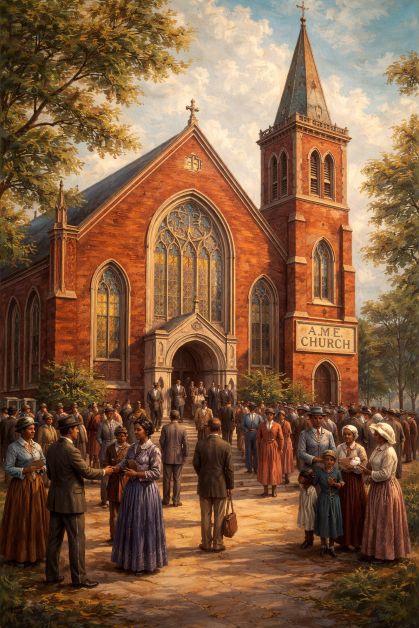
The AME Church During Reconstruction Era played a powerful role in shaping freedom, education, and leadership for African Americans after slavery ended. In the years following the Civil War, the African Methodist Episcopal Church became more than a place of worship. It became a center for hope, learning, and community rebuilding.
This article explains how the AME Church grew during Reconstruction, what challenges it faced, and why its mission still matters today. If you want to understand how faith helped rebuild lives after slavery, this guide gives clear and trusted insight.
What Was the Reconstruction Era?
The Reconstruction Era lasted from 1865 to 1877, right after the Civil War. During this time:
- Millions of formerly enslaved people gained freedom
- The U.S. government worked to rebuild the South
- New laws aimed to give rights to Black Americans
However, freedom did not mean safety or equality. Many faced violence, poverty, and limited access to education. This is where the AME Church stepped in.
The Foundation of the AME Church
The AME Church began long before Reconstruction. It was founded in 1816 by Richard Allen, a former slave who believed in freedom and dignity for all people.
From the beginning, the church stood for:
- Spiritual growth
- Social justice
- Education
- Self-reliance
These values guided the church during Reconstruction and helped it grow quickly across the United States.
Growth of the AME Church During Reconstruction
Rapid Expansion Across the South
After the Civil War, the AME Church expanded into Southern states where slavery had once been strongest. Thousands of freed people joined the church because it offered:
- A safe place to gather
- Leadership from Black ministers
- A message of hope and equality
By the 1870s, the AME Church had hundreds of congregations and a growing membership.
A Place of Freedom and Identity
For many freed people, the church was the first space where they could:
- Speak freely
- Worship without control
- Build their own community
The church helped people form a new identity as free citizens.
Education and Empowerment
Building Schools and Colleges
Education became a top priority. The AME Church believed that learning leads to freedom. During Reconstruction, the church helped establish:
- Schools for children and adults
- Colleges for higher learning
- Training programs for teachers and ministers
Some AME institutions still exist today, showing the lasting impact of this mission.
Teaching Life Skills
Churches also taught:
- Reading and writing
- Financial responsibility
- Leadership skills
This helped newly freed individuals build stable lives.
Role in Politics and Leadership
Raising New Leaders
The AME Church trained leaders who became:
- Teachers
- Ministers
- Politicians
Many Black leaders during Reconstruction came from church communities.
Fighting for Rights
The church supported:
- Voting rights
- Equal protection under the law
- Fair treatment in society
Its leaders spoke against injustice and worked for change.
Challenges Faced During Reconstruction
Violence and Opposition
The growth of the AME Church brought resistance. Many faced:
- Attacks from white supremacist groups
- Burned churches
- Threats against leaders
Despite this, the church continued to grow.
Limited Resources
Many congregations had:
- Few buildings
- Little funding
- Large communities to serve
Even with these struggles, faith kept the movement strong.
Spiritual Strength and Doctrine
The AME Church relied on its teachings to guide people through hard times. Its beliefs are rooted in African Methodist Episcopal Church Doctrine and The Doctrine and Discipline of the African Methodist Episcopal, which emphasize:
- Faith in God
- Personal responsibility
- Community service
- Moral living
As seen in the Member’s Class 102 manual, the church teaches that faith should lead to action. This idea helped people rebuild their lives during Reconstruction.
Connection to the Free African Society
The AME Church’s mission grew from earlier efforts like the Free African Society, which supported:
- Widows
- The poor
- The sick
This tradition continued during Reconstruction, where churches:
- Fed the hungry
- Helped the homeless
- Supported families in need
Long-Term Impact of the AME Church
Strengthening Communities
The AME Church helped create strong communities that:
- Valued education
- Supported one another
- Built economic stability
Lasting Institutions
Many schools, churches, and organizations started during Reconstruction still exist today.
A Model for Faith in Action
The AME Church showed that faith is not just belief—it is action. It demonstrated how religion can support justice and growth.
Why This History Still Matters Today
Understanding the AME Church During Reconstruction Era helps us see:
- How faith supports social change
- Why education remains important
- The power of community leadership
These lessons still apply today.
FAQs
1. What role did the AME Church play during Reconstruction?
The AME Church provided spiritual support, education, and leadership for freed African Americans. It helped rebuild communities after slavery.
2. Why did the AME Church grow so quickly?
Many freed people joined because it offered freedom, leadership, and support during a difficult time.
3. Who founded the AME Church?
The church was founded by Richard Allen in 1816.
4. How did the AME Church support education?
It built schools, colleges, and training programs to teach reading, writing, and leadership skills.
5. What challenges did the AME Church face?
It faced violence, lack of resources, and strong opposition, but continued to grow through faith and unity.
6. What is the importance of AME doctrine?
The teachings guide members in faith, discipline, and service, helping them live meaningful and responsible lives.
The AME Church During Reconstruction Era stands as a powerful example of faith in action. It helped transform a time of struggle into a period of growth, learning, and leadership. Through strong beliefs, community care, and commitment to justice, the AME Church became a pillar of hope.
If this history inspired you, take the next step:
- Share your thoughts in the comments
- Reflect on how faith and community shape change today
- Explore more about AME teachings and history to deepen your understanding
Your voice and curiosity help keep this important story alive.
0 Comments