


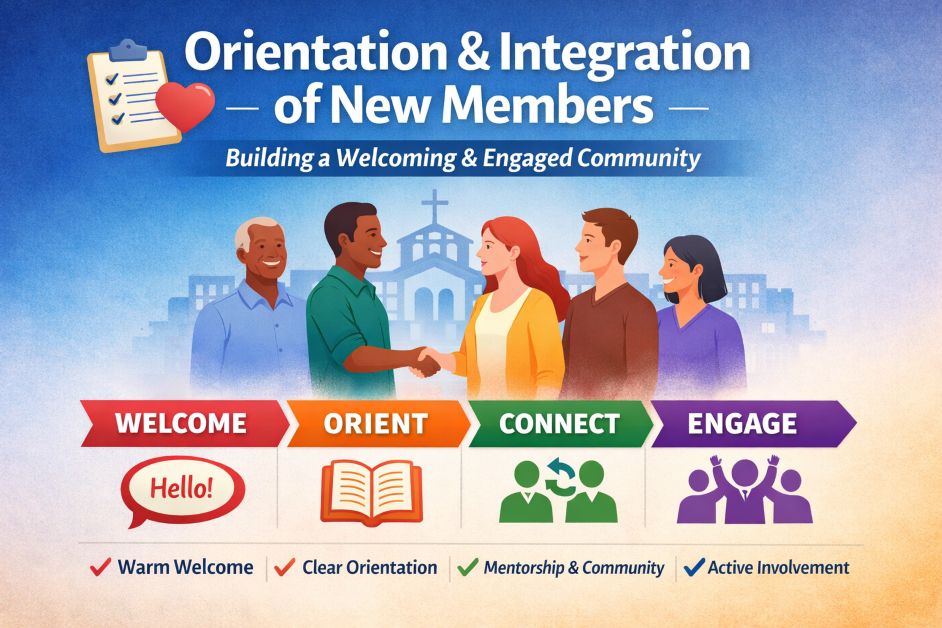
That’s where Orientation and Integration of New Members becomes essential.
Many organizations and churches struggle to retain new members—not because people aren’t interested, but because they are not fully connected.
While orientation introduces people to your mission, integration ensures they feel valued, engaged, and committed long-term.
In this guide, you’ll learn how to build a complete system for new member onboarding, improve member engagement strategies, and create lasting connections that strengthen your community.
What Is Orientation and Integration of New Members? (Simple Definition)
Orientation and Integration of New Members is a two-part process designed to welcome and retain individuals:
- Orientation → Introducing mission, values, and structure
- Integration → Helping members build relationships and become active participants
Quick Comparison
| Orientation | Integration |
|---|---|
| Short-term | Long-term |
| Information-focused | Relationship-focused |
| One-time event | Ongoing process |
Understanding this difference is key to improving your new member onboarding process.
Why Orientation Alone Is Not Enough
Many organizations stop at orientation, and that’s where the problem begins.
Without integration:
- Members feel disconnected
- Participation drops
- Retention declines
Effective member retention strategies require more than information—they require connection.
Integration transforms visitors into committed members.
The 3 Phases of Successful New Member Integration
Phase 1: Pre-Orientation Preparation
- Send welcome messages
- Provide basic information
- Set expectations
This stage strengthens your onboarding experience before members even arrive.
Phase 2: Orientation Experience
- Introduce mission and values
- Explain the structure and opportunities
- Create a welcoming environment
A strong orientation builds the foundation for member engagement.
Phase 3: Post-Orientation Integration
- Connect members with groups
- Assign mentors or leaders
- Encourage participation
This is where community integration strategies truly make an impact.
Step-by-Step Process for Orientation and Integration of New Members
Step 1: Create a Warm Welcome System
- Personal greetings
- Welcome messages
- Friendly environment
Step 2: Deliver a Clear Orientation Program
- Structured lessons
- Simple explanations
- Interactive sessions
Step 3: Assign Mentors or Leaders
- Provide guidance
- Build relationships
- Encourage accountability
Step 4: Connect Members to Groups or Ministries
- Small groups
- Volunteer teams
- Ministry involvement
Step 5: Follow Up Consistently
- Regular check-ins
- Feedback opportunities
- Continued encouragement
This structured approach strengthens your new member onboarding system and improves long-term engagement.
Best Practices for Engaging New Members
Build Personal Relationships
People stay where they feel known and valued.
Communicate Clearly and Consistently
Use emails, messages, and announcements to keep members informed.
Create Opportunities for Participation
Encourage involvement early to boost member engagement strategies.
Encourage Growth and Development
Provide resources for spiritual, personal, or professional growth.
Common Mistakes in Member Orientation and Integration
Avoid these common pitfalls:
- Skipping follow-up after orientation
- Overloading new members with information
- Failing to build relationships
- Not providing clear next steps
Fixing these issues improves your member retention strategies significantly.
Tools and Strategies to Improve Member Integration
Digital Communication Tools
- Email newsletters
- Messaging apps
- Online platforms
Small Groups and Mentorship Programs
- Build deeper connections
- Encourage accountability
Events and Engagement Activities
- Social gatherings
- Workshops
- Volunteer opportunities
These tools support a stronger integration process.
Orientation and Integration in Church Settings (Special Focus)
In churches, Orientation and Integration of New Members goes beyond structure—it’s about belonging and spiritual growth.
Key focus areas:
- Faith development
- Community connection
- Ministry involvement
A strong system ensures members feel spiritually and socially connected.
Measuring Success: How to Know Your Integration Is Working
Retention Rates
Are members staying long-term?
Engagement Levels
Are they actively participating?
Participation Growth
Are more members joining groups and activities?
Tracking these helps refine your onboarding process.
Frequently Asked Questions (FAQs)
What is Orientation and Integration of New Members?
It is the process of welcoming, teaching, and fully connecting new members to a community.
What is the difference between orientation and onboarding?
Orientation is the introduction, while onboarding (integration) is the long-term engagement process.
How long should integration take?
Integration is ongoing and can take several months, depending on the organization.
How do you keep new members engaged?
Through relationships, consistent communication, and active involvement, opportunities.
Orientation and Integration Checklist (Quick Summary)
- Welcome new members warmly
- Provide a clear orientation
- Assign mentors
- Connect to groups
- Follow up consistently
This checklist simplifies your new member onboarding process.
Conclusion: Turning New Members Into Engaged Participants
Effective Orientation and Integration of New Members transforms casual attendees into committed, active participants.
When done right, it builds:
- Strong relationships
- Long-term engagement
- A thriving community
Ready to improve your member engagement strategies?
Start building your orientation and integration system today
Share this guide with your team or church leaders
Create a welcoming environment where every member belongs

0 Comments