


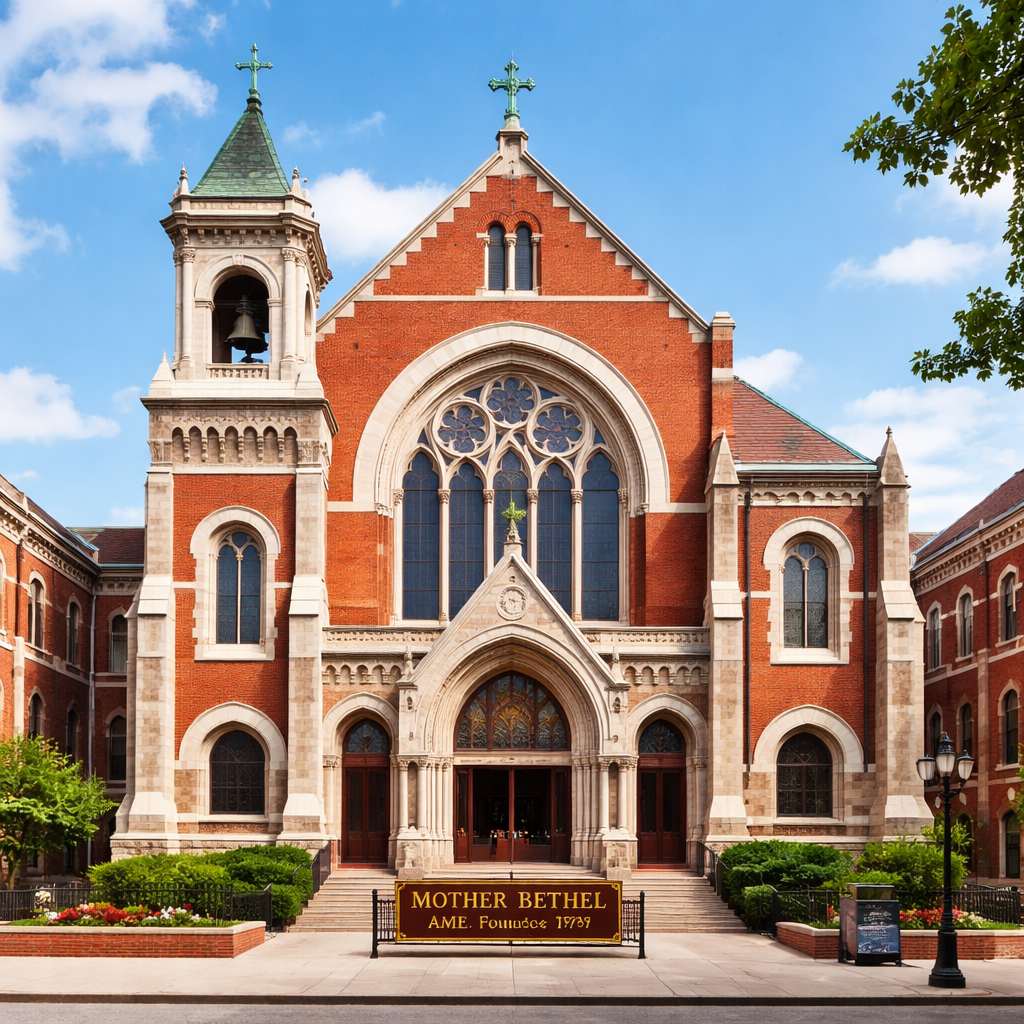
The AME Church Influence on African-American Communities is one of the most powerful stories in American religious history. The African Methodist Episcopal Church shaped Black faith, education, civil rights, and community leadership for over 200 years. It gave people hope during slavery. It built schools during segregation. It trained leaders during the Civil Rights Movement.
If you want to understand how faith strengthened African-American communities, you must understand the role of the AME Church.
This article explains how the African Methodist Episcopal Church history, leadership, doctrine, and community work helped build stronger families, churches, and neighborhoods across the United States.
The Birth of the African Methodist Episcopal Church
The African Methodist Episcopal Church began in 1816 in Philadelphia. It was founded by Richard Allen, a former slave who bought his freedom. He and other Black worshippers left St. George's Methodist Church after facing racial discrimination.
They organized a new church where African Americans could worship with dignity. That church became Mother Bethel AME Church, the first AME congregation.
In April 1816, Black Methodist congregations met and officially formed the African Methodist Episcopal Church. Richard Allen became the first bishop.
This moment changed American church history forever.
Why the AME Church Was Necessary
The AME Church was formed because African Americans faced:
- Segregated seating in churches
- Limited leadership roles
- Denied voting power within congregations
- Social injustice tied to slavery
The AME Church Influence on African-American Communities began with one simple belief: Black Christians deserved spiritual freedom and leadership authority.
The church adopted Methodist doctrine, the Book of Discipline, and an episcopal structure with bishops. But it created independent Black governance.
This independence built confidence, ownership, and identity.
AME Church Influence on African-American Communities Through Faith and Worship
Faith was the foundation.
The AME Church taught:
- Salvation through Jesus Christ
- The Trinity (Father, Son, Holy Spirit)
- Personal discipline and holy living
- Biblical education for all ages
Worship services were energetic, Scripture-centered, and community-driven. The church used hymns, preaching, prayer meetings, and class meetings to strengthen believers.
This approach built spiritual resilience.
During slavery and Jim Crow, the AME Church became a safe space. It offered hope when laws offered none.
Education: A Core Part of AME Church Influence
Education is one of the strongest examples of AME Church Influence on African-American Communities.
After the Civil War, the AME Church helped establish schools and colleges for freed people. These institutions trained teachers, ministers, and community leaders.
Some AME-related schools include:
- Wilberforce University (founded 1856)
- Allen University
- Paul Quinn College
Education meant literacy. Literacy meant power.
By the early 1900s, thousands of African Americans received education through AME-supported institutions.
The church believed that faith without knowledge was incomplete.
Social Justice and Civil Rights Leadership
The AME Church never separated faith from freedom.
Richard Allen preached against slavery. Later AME leaders supported abolition, voting rights, and civil equality.
During the Civil Rights Movement, many AME churches became meeting spaces for organizing peaceful protests.
The church also encouraged economic empowerment. In 1830, leaders promoted boycotts of goods produced by slave labor. That model later influenced strategies used in the 1960s.
The AME Church taught that Christian faith includes justice.
Economic Strength and Community Development
The AME Church Influence on African-American Communities extended into economic life.
Church members:
- Built property
- Purchased land
- Started businesses
- Created mutual aid societies
The Free African Society, organized in 1787, helped widows, the sick, and the unemployed.
Church basements served as meeting halls, classrooms, and Underground Railroad stops.
The AME Church helped families survive when banks and governments excluded them.
Women’s Leadership in the AME Church
Women shaped the AME Church from the beginning.
Sarah Allen, wife of Richard Allen, organized women to:
- Sew clothes for ministers
- Feed the poor
- Educate children
- Support missionaries
She helped establish what became the Women’s Missionary Society.
Women raised funds, taught classes, and built outreach ministries.
Their leadership strengthened families and congregations.
The AME Church and the Underground Railroad
Historical records show that AME churches, including Mother Bethel, assisted escaped slaves.
Church leaders hid, fed, and guided individuals seeking freedom.
The church building was more than a sanctuary. It was a refuge.
This direct action proved that faith must produce courage.
Connectional Structure: A System That Builds Unity
The AME Church operates under a connectional system. Local churches connect to districts, conferences, and bishops.
This structure ensures:
- Shared doctrine
- Financial accountability
- Leadership training
- Coordinated mission work
The system creates unity across states and countries.
Today, the AME Church serves members in the United States, Africa, the Caribbean, and beyond.
Statistical and Historical Impact
Here are verifiable facts about AME influence:
- Founded in 1816 in Philadelphia
- One of the first independent Black denominations in the United States
- Established multiple historically Black colleges and universities
- Played a documented role in abolition and civil rights activism
- Expanded internationally in the late 19th century
According to historical church records, membership grew rapidly in the 19th century as newly freed African Americans sought spiritual leadership within their own communities.
The church provided structure during Reconstruction when government systems were unstable.
Cultural Influence on African-American Identity
The AME Church shaped:
- Black preaching traditions
- Gospel music development
- Community-centered worship
- Leadership training for pastors and bishops
Church anniversaries, revivals, and conferences created cultural stability.
For many African-American families, the church became the center of social life.
Faith, family, and freedom connected under one roof.
FAQs About AME Church Influence on African-American Communities
1. What does AME stand for?
AME stands for African Methodist Episcopal.
2. Who founded the AME Church?
Richard Allen founded the church in 1816.
3. Why did the AME Church separate from white Methodists?
Black members faced racial discrimination and limited leadership opportunities.
4. How did the AME Church support education?
It founded schools and colleges for freed slaves and trained teachers and ministers.
5. Did the AME Church support civil rights?
Yes. The church supported abolition, voting rights, and civil rights activism.
6. What is the connectional system?
It is a church structure where local congregations connect under district and episcopal leadership.
Why the AME Church Influence Still Matters Today
The AME Church Influence on African-American Communities continues.
The church still promotes:
- Biblical teaching
- Education
- Social justice
- Global missions
- Economic awareness
Its history proves that faith communities can change society.
The AME Church began as a response to injustice. It became a force for empowerment.
The AME Church Influence on African-American Communities is a story of courage, faith, and organized action.
From Richard Allen’s walkout at St. George’s to the founding of Mother Bethel, from Underground Railroad efforts to founding universities, the church created space for dignity and leadership.
It taught generations that spiritual freedom and social freedom belong together.
If this article helped you understand the powerful legacy of the AME Church, leave a comment below and share which part of its history inspires you most. Let’s continue learning and preserving this important heritage.
0 Comments
Trackbacks/Pingbacks