


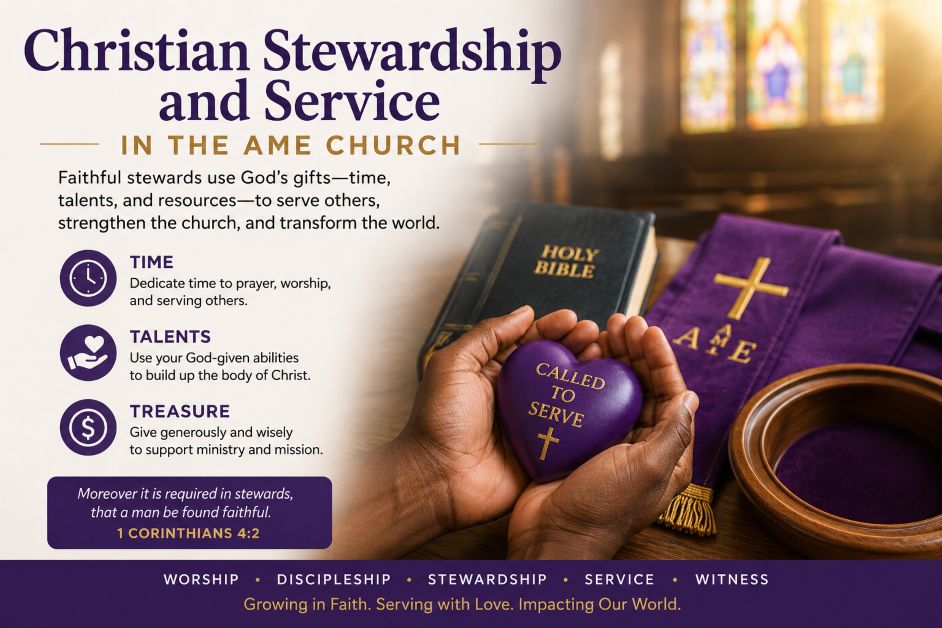
The call to Christian stewardship is far greater than simply managing finances or supporting church programs. In the African Methodist Episcopal Church, stewardship is a spiritual commitment that reflects faithful discipleship, servant leadership, and responsible Christian living. True stewardship involves offering our time, talents, resources, compassion, and service to God for the strengthening of both the church and the community.
Many believers hear the word “stewardship” and immediately think of money. However, the biblical understanding of stewardship reaches into every area of life. It shapes how Christians worship, serve others, lead ministries, support missions, and represent Christ in daily living. Within the AME tradition, stewardship is deeply connected to Christian education, social justice, discipleship, and community transformation.
Resources such as Member’s Class 102 and Stepping Into Discipleship: Our Journey Begins emphasize that faithful discipleship requires commitment, accountability, and active participation in the life of the church. These principles align closely with the mission of Christian Stewardship and Service in the AME Church, where believers are called to become faithful servants of God and responsible caretakers of His work.
What Is Christian Stewardship in the AME Church?
Christian Stewardship and Service in the AME Church refers to the biblical responsibility of managing God’s gifts faithfully while serving others in love and humility. Stewardship is not ownership; it is management. Everything believers possess ultimately belongs to God, including time, abilities, finances, relationships, and opportunities for ministry.
The Bible teaches in 1 Corinthians 4:2, “Moreover it is required in stewards, that a man be found faithful.” Faithfulness is the foundation of stewardship. Christians are called to use their resources wisely and honor God through their actions.
Within the AME Church, stewardship extends beyond personal spirituality into collective ministry and community responsibility. Churches depend upon faithful stewardship to support worship services, outreach ministries, Christian education, missions, and care for those in need.
The Biblical Meaning of Stewardship
Biblical stewardship begins in Genesis when humanity is given responsibility over creation. God entrusted mankind with care, management, and accountability. Jesus further illustrated stewardship through parables such as the Parable of the Talents in Matthew 25:14–30, teaching believers to use what God has entrusted to them productively and faithfully.
This biblical principle supports the broader mission of AME Church stewardship, where members are encouraged to actively participate in ministry and service rather than remain passive observers.
Why Stewardship Matters in Christian Living
Stewardship matters because it reflects obedience and spiritual maturity. Faithful stewardship demonstrates:
- Commitment to God
- Love for the church
- Responsibility toward others
- Willingness to serve
- Spiritual growth through discipleship
A healthy stewardship culture strengthens congregations and creates ministries capable of impacting communities for Christ.
The Biblical Foundation of Service and Stewardship
The life of Jesus Christ serves as the perfect example of service-centered stewardship. Jesus taught His followers that greatness comes through humility and service. In Mark 10:45, Jesus declared, “For even the Son of man came not to be ministered unto, but to minister.”
This teaching remains central to Christian service within the AME Church today.
Stewardship of Time, Talent, and Treasure
One of the most recognized principles of biblical stewardship involves managing:
- Time
- Talents
- Treasure
Stewardship of Time
Christians honor God by dedicating time to worship, prayer, Bible study, ministry, and serving others.
Stewardship of Talents
God gives every believer unique abilities and spiritual gifts. These gifts should be used to build the church, encourage others, and advance the Gospel.
Stewardship of Treasure
Financial stewardship includes giving, generosity, and supporting ministry work. The church depends upon faithful giving to maintain ministries, missions, outreach programs, and community support initiatives.
However, stewardship is never limited to money alone. It includes every area of faithful Christian living.
Stewardship in the History of the African Methodist Episcopal Church
The history of the African Methodist Episcopal Church reflects a powerful legacy of service, sacrifice, and faithful stewardship.
Richard Allen and the Foundation of Service
Richard Allen established the AME Church upon principles of dignity, freedom, education, and community empowerment. Stewardship in the early AME Church involved caring for marginalized communities, supporting education, and providing practical assistance to people facing oppression and discrimination.
From its earliest days, the AME Church understood stewardship as both spiritual and social responsibility.
Stewardship and Social Justice in the AME Tradition
The AME Church has historically supported:
- Educational advancement
- Community outreach
- Civil rights advocacy
- Missionary work
- Care for vulnerable populations
This connection between stewardship and justice remains important today. Modern churches continue serving communities through food programs, mentoring initiatives, disaster response, prison ministry, and educational support.
These ministries demonstrate how stewardship and discipleship work together to transform lives.
Roles of Stewards and Church Leaders in the AME Church
The AME Church includes structured leadership roles that support ministry and accountability.
Responsibilities of the Steward Board
The Steward Board plays a vital role within AME congregations. Responsibilities often include:
- Supporting the pastor
- Managing church finances
- Assisting with communion preparation
- Caring for members in need
- Encouraging stewardship education
These duties help ensure the church functions responsibly and faithfully.
Stewardesses and Sacred Service
Stewardesses provide important service connected to worship preparation and sacramental responsibilities. Their ministry reflects reverence, order, and servant leadership within the church.
Trustees and Financial Stewardship
Trustees oversee church property and financial responsibilities. Proper management of church resources strengthens long-term ministry sustainability and demonstrates integrity within the congregation.
Financial transparency and accountability are increasingly important aspects of modern church stewardship responsibilities.
Christian Stewardship Beyond Money
Many churches focus heavily on financial giving while overlooking other essential forms of stewardship. Effective Christian Stewardship and Service in the AME Church includes faithful living in every area.
Stewardship of Spiritual Gifts
Romans 12 and 1 Peter 4:10 teach believers to use their spiritual gifts for the benefit of others. Some members may teach, sing, encourage, organize, mentor, or lead ministries. Every gift contributes to the health of the church.
Stewardship of Relationships
Christians are also stewards of relationships. Encouraging others, supporting families, mentoring youth, and strengthening fellowship all reflect faithful stewardship.
Digital Stewardship in Modern Ministry
Today’s churches increasingly operate in digital spaces. Christians must demonstrate responsible online behavior, ethical communication, and positive representation of the Gospel through social media and online ministry.
Digital stewardship includes:
- Encouraging healthy communication
- Sharing uplifting content
- Avoiding harmful online behavior
- Supporting virtual ministry outreach
This modern perspective is often missing from discussions about stewardship in Christianity, yet it has become increasingly important.
How AME Members Can Practice Stewardship Daily
Faithful stewardship is not reserved for church leaders alone. Every believer has opportunities to serve and contribute meaningfully.
Seven Practical Ways to Practice Christian Stewardship
- Pray consistently for the church and community
- Volunteer in ministry programs
- Support outreach and missions financially
- Use personal gifts to serve others
- Encourage younger believers in faith
- Participate in Bible study and discipleship
- Live with honesty, compassion, and integrity
These simple practices strengthen both personal faith and congregational unity.
Stewardship in Families and Homes
Christian stewardship begins at home. Families can practice stewardship through:
- Prayer together
- Teaching biblical values
- Modeling generosity
- Serving the community together
Strong Christian households help strengthen the church itself.
Stewardship in the Community
Church stewardship extends beyond church walls. AME congregations often support:
- Food distribution ministries
- Youth mentoring
- Community education
- Homeless outreach
- Prison ministries
- Health and wellness initiatives
These ministries reflect the servant-centered mission of Christ.
Challenges Facing Stewardship in Today’s Church
Modern churches face several stewardship challenges that require wisdom and intentional leadership.
Stewardship Fatigue and Volunteer Burnout
Many faithful members serve continuously without adequate support or rest. Churches must balance ministry expectations with encouragement, appreciation, and healthy leadership practices.
Financial Transparency and Trust
Church members increasingly expect clear accountability regarding finances and leadership decisions. Healthy stewardship includes honesty, transparency, and ethical financial management.
Engaging Younger Generations
Many younger Christians seek purpose-driven ministry opportunities rather than traditional organizational structures alone. Churches can strengthen engagement by:
- Encouraging mentorship
- Expanding digital ministry
- Creating outreach opportunities
- Supporting leadership development
Effective servant leadership in the church requires adapting ministry approaches while remaining grounded in biblical principles.
Building a Strong Stewardship Culture in the AME Church
Strong churches intentionally teach stewardship through discipleship, leadership development, and Christian education.
Stewardship Through Christian Education
Christian education ministries help members understand:
- Biblical stewardship
- Church responsibilities
- Discipleship practices
- Leadership development
- Spiritual growth
Resources such as Member’s Class 102 and Stepping Into Discipleship: Our Journey Begins provide valuable guidance for developing faithful disciples committed to service and stewardship.
Encouraging Servant Leadership
Servant leadership reflects humility, accountability, compassion, and cooperation. Effective leaders inspire others through example rather than control.
Healthy churches cultivate leaders who:
- Serve faithfully
- Support others
- Encourage spiritual growth
- Promote unity
- Demonstrate integrity
Strengthening Church Growth Through Service
Churches grow stronger when members actively serve both inside and outside the congregation. Outreach ministries, missions, mentorship programs, and volunteer opportunities create visible expressions of Christian faith.
A thriving culture of AME Church ministries and stewardship builds stronger congregations and healthier communities.
Conclusion
Christian Stewardship and Service in the AME Church is far more than financial giving. It is a lifelong commitment to faithful discipleship, servant leadership, spiritual growth, and community impact. Through stewardship, believers honor God by managing their time, talents, relationships, resources, and opportunities responsibly.
The AME Church has a rich history of combining stewardship with education, justice, ministry, and compassionate service. That legacy continues today as churches seek to strengthen discipleship and transform communities through faithful Christian living.
Every believer has a role to play. Whether through worship, outreach, mentoring, leadership, prayer, or acts of compassion, stewardship allows Christians to participate actively in God’s mission.
As Christians continue growing in faith and discipleship, stewardship becomes not merely a duty, but an expression of love, gratitude, and commitment to Christ and His Church.

0 Comments