


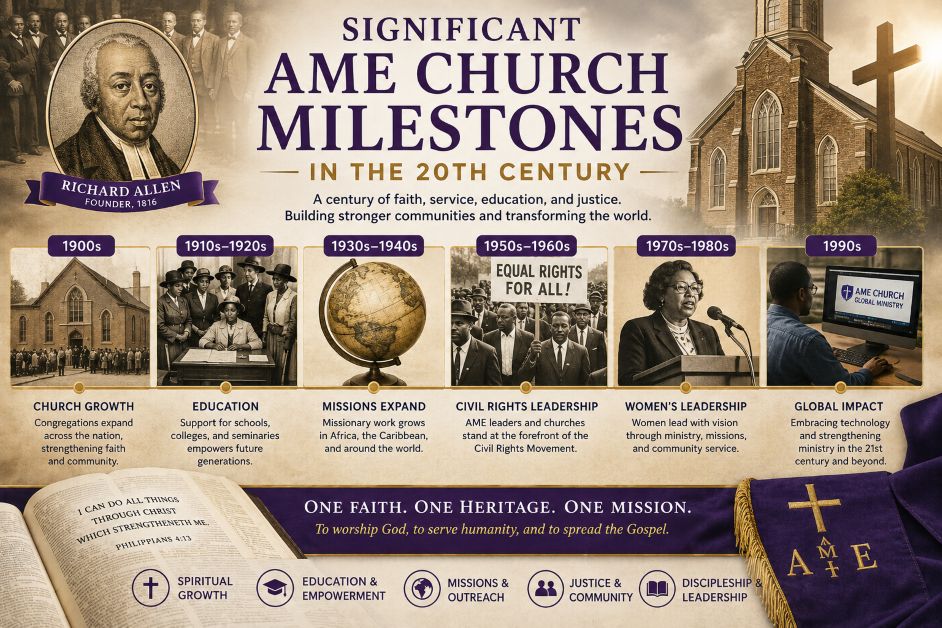
Understanding these Significant AME Church Milestones in the 20th Century provides valuable insight into how the denomination evolved into one of the most influential African American Christian organizations in history.
The 20th century was a transformative era for the African Methodist Episcopal Church. From educational expansion and missionary outreach to civil rights leadership and global ministry growth, the denomination experienced remarkable progress that shaped both the church and society. The history of the AME Church during the 1900s reflects perseverance, faith, leadership, and an unwavering commitment to justice and Christian service.
Many historical summaries discuss the founding of the AME Church and the leadership of Richard Allen, yet fewer articles fully explore the major developments that occurred during the 20th century. These decades witnessed extraordinary milestones that strengthened the church’s influence in education, missions, social justice, community leadership, and global evangelism.
The AME Church Entering the 20th Century
As the 1900s began, the AME Church was already firmly established as a powerful spiritual and social institution within African American communities.
The Legacy of Richard Allen
The vision established by Richard Allen continued guiding the denomination into the new century. Richard Allen founded the church upon principles of:
- spiritual independence,
- racial equality,
- Christian education,
- self-governance,
- and community empowerment.
His leadership inspired generations of clergy and church members to pursue ministry that addressed both spiritual and social needs.
The AME Church became more than a place of worship. It became a center for education, advocacy, leadership development, and economic support within Black communities throughout the United States.
Growth After Reconstruction
Following Reconstruction, African American churches expanded rapidly across urban and rural communities. Congregations increased as formerly enslaved families sought faith communities that affirmed dignity, leadership opportunities, and educational advancement.
This growth marked one of the earliest African Methodist Episcopal Church milestones of the 20th century. Churches were planted in new cities, conferences expanded, and denominational leadership structures strengthened.
Major AME Church Milestones in the Early 1900s
The early decades of the century brought substantial institutional and spiritual growth.
Expansion of Educational Institutions
One of the most important AME Church educational institutions developments involved the continued support of schools, colleges, and seminaries. Education remained central to the church’s mission.
AME-affiliated institutions provided:
- theological training,
- leadership preparation,
- academic education,
- and opportunities for African American advancement during segregation.
The denomination recognized that education empowered communities and strengthened future church leadership.
Growth of Missionary Societies
Missionary work expanded significantly during the early 20th century. Women’s missionary societies played an especially important role in:
- fundraising,
- overseas missions,
- community outreach,
- education programs,
- and health initiatives.
These missionary movements became major drivers of church growth and international evangelism.
Publishing and Christian Education
The church also strengthened denominational publications and Christian education materials. Sunday school literature, leadership manuals, and church publications helped unify congregations and educate members in biblical teaching and church doctrine.
This period marked a major advancement in AME Church leadership development through structured Christian education.
The AME Church and the Civil Rights Movement
One of the most defining Significant AME Church Milestones in the 20th Century was the denomination’s involvement in the Civil Rights Movement.
AME Churches as Community Organizing Centers
During segregation and racial discrimination, AME churches often served as:
- meeting spaces,
- educational centers,
- voter registration sites,
- organizing headquarters,
- and safe gathering places for activists.
Pastors and church leaders encouraged civic participation and social engagement while providing spiritual support to communities facing injustice.
Influential AME Leaders During the Civil Rights Era
Throughout the Civil Rights Movement, numerous AME bishops, pastors, and members advocated for equality, voting rights, and educational opportunities.
Church leaders promoted:
- peaceful activism,
- community organization,
- educational reform,
- and economic empowerment.
The denomination’s commitment to justice reflected its long-standing mission of combining faith with action.
Social Justice and Community Advocacy
The AME Church consistently supported causes related to:
- racial equality,
- poverty reduction,
- educational access,
- labor rights,
- and community welfare.
This advocacy strengthened the church’s reputation as a major force within African American church history and social reform movements.
Women’s Contributions to AME Church Growth
Women played a critical role in the church’s expansion throughout the 20th century, although their contributions are often underrepresented in historical discussions.
Women’s Missionary Societies
Women’s missionary organizations supported:
- local outreach ministries,
- educational programs,
- missionary expansion,
- charity work,
- and church fundraising initiatives.
Their efforts significantly strengthened both local congregations and international missions.
Women in Christian Education
Women also served as:
- Sunday school teachers,
- Christian educators,
- ministry organizers,
- youth mentors,
- and leadership trainers.
Their work helped shape generations of church members and future clergy leaders.
Expanding Leadership Opportunities
As the century progressed, women gained greater opportunities for leadership and ministry participation within the denomination. Their expanding influence reflected broader conversations about equality and service within the church.
This remains one of the most important but frequently overlooked AME Church historical timeline developments.
Global Expansion of the AME Church
Another major milestone involved the church’s growth beyond the United States.
AME Missions in Africa
The denomination expanded missionary efforts throughout Africa during the 20th century. Missionaries established:
- congregations,
- schools,
- ministry training centers,
- and outreach programs.
These efforts strengthened the church’s international identity and global spiritual influence.
Caribbean and International Growth
The AME Church also experienced growth throughout the Caribbean and other international regions. Conferences and congregations expanded beyond American borders, creating a truly global denomination.
This global outreach became one of the defining AME Church global expansion achievements of the century.
The AME Church as a Global Denomination
By the late 20th century, the AME Church had become internationally recognized for:
- missions,
- education,
- leadership development,
- social advocacy,
- and spiritual ministry.
Its global presence reflected the denomination’s continued commitment to evangelism and Christian service.
Educational and Institutional Milestones
Education remained one of the denomination’s strongest priorities throughout the century.
Expansion of Colleges and Seminaries
AME colleges and seminaries helped prepare:
- clergy,
- teachers,
- missionaries,
- and community leaders.
These institutions contributed significantly to African American advancement during eras when educational opportunities were often restricted elsewhere.
Christian Education and Sunday School Growth
Sunday school programs expanded dramatically during the 20th century. Churches invested heavily in:
- biblical literacy,
- discipleship,
- youth education,
- and leadership training.
Christian education became essential for preserving denominational identity and strengthening future generations.
Leadership Development and Ministerial Training
The church also developed stronger systems for clergy preparation and conference leadership. Ministerial training programs improved pastoral education and administrative leadership across the denomination.
These developments strengthened long-term denominational stability and ministry effectiveness.
Technological and Organizational Advancements
The late 20th century brought modernization efforts that transformed church administration and communication.
Media and Communication Ministry Expansion
The AME Church increasingly used:
- radio broadcasts,
- television programs,
- printed publications,
- and public media outreach.
These tools expanded ministry visibility and helped churches reach broader audiences.
Organizational Modernization
Church leadership also improved:
- administrative systems,
- financial structures,
- conference coordination,
- and institutional planning.
Modern organizational practices strengthened accountability and denominational management.
Preparing for the 21st Century
As the century ended, churches began preparing for future ministry challenges involving:
- technology,
- urban ministry,
- changing demographics,
- and global communication.
This transition helped position the denomination for continued influence in the modern era.
Challenges Faced by the AME Church During the 20th Century
Despite its growth, the denomination also faced significant obstacles.
Racism and Segregation
Racial discrimination deeply impacted African American churches throughout much of the century. AME congregations often became places of refuge, empowerment, and resilience during difficult times.
Economic Challenges
Many churches struggled financially during economic downturns and demographic changes. Urban migration patterns also affected membership and local congregational stability.
Maintaining Unity During Change
As the church expanded internationally and adapted to modernization, leaders worked to preserve doctrinal unity and organizational stability while addressing changing ministry needs.
Lasting Impact of 20th-Century AME Church Milestones
The achievements of the 20th century continue shaping the modern denomination today.
Influence on African American Religious History
The church remains one of the most influential institutions within African American church history due to its leadership in:
- education,
- civil rights,
- missions,
- and social reform.
Continuing the Legacy of Service and Justice
Modern AME congregations continue supporting:
- community outreach,
- education initiatives,
- advocacy programs,
- discipleship,
- and global missions.
These ministries reflect the enduring legacy established throughout the 20th century.
How These Milestones Shape the Modern AME Church
The denomination’s historical milestones helped establish:
- strong leadership traditions,
- educational systems,
- missionary structures,
- social justice ministries,
- and global partnerships.
These foundations continue influencing modern ministry and denominational identity.
Conclusion
The story of the Significant AME Church Milestones in the 20th Century is a story of faith, perseverance, leadership, and transformation. Throughout the century, the African Methodist Episcopal Church expanded educational institutions, strengthened missionary outreach, supported civil rights activism, modernized church administration, and grew into a global denomination.
From the enduring vision of Richard Allen to the global ministries of the late 20th century, the AME Church consistently demonstrated a commitment to justice, discipleship, education, and Christian service.
These milestones continue shaping the church today. Modern congregations still build upon the foundation established through generations of faithful leadership and ministry. By understanding this history, believers gain a deeper appreciation for the denomination’s spiritual legacy and ongoing mission.
The influence of the AME Church throughout the 20th century remains a powerful testimony to the enduring impact of faith-centered leadership, community service, and Christian perseverance.
0 Comments