


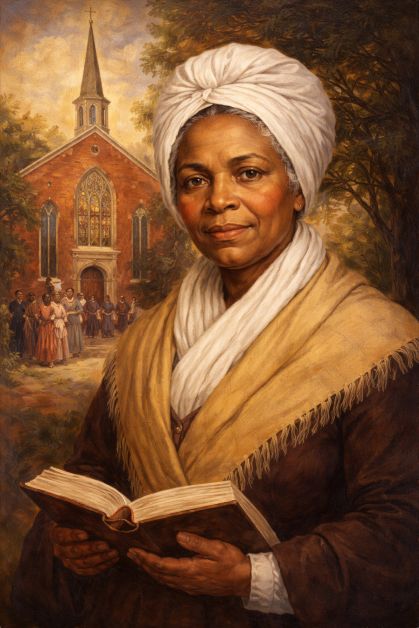
When people talk about the historical role of the African Methodist Episcopal Church (AME), they often name bishops and pastors. But behind the pulpit stood strong, faithful women. These AME women leaders shaped the church, led mission work, funded schools, and fought for freedom.
Their work changed communities across the United States, Africa, and the Caribbean. Their leadership still guides the church today.
In this article, you will learn:
- How AME women leaders helped build the church
- Why the Women’s Missionary Society matters
- How faith led women into social justice work
- What lessons their legacy teaches us today
If you care about Black church history, Christian women leaders, and faith-based social justice, this story is for you.
The Foundation: Sarah Allen and the Birth of Women’s Leadership
Sarah Allen: The First AME Missionary
The story begins with Sarah Allen (1764–1849), often called the “Mother of African Methodism.”
She was born into slavery in Virginia. She later gained her freedom and married Richard Allen, founder of the AME Church.
But Sarah Allen did more than support her husband.
She:
- Opened her home to traveling preachers
- Organized women to sew clothes for ministers
- Helped hide enslaved people through the Underground Railroad efforts
- Started organized women’s mission work in the church
When AME ministers returned from travel with worn clothes and empty pockets, she gathered women to make new garments overnight. This effort grew into the Daughters of Conference, which later became the Women’s Missionary Society (WMS).
Her work shows a clear truth: AME women's leadership began at the church’s foundation.
The Women’s Missionary Society: A Movement Within a Movement
The Women’s Missionary Society of the AME Church became one of the most powerful women-led church organizations in American religious history.
Why the WMS Matters
The WMS focused on:
- Education for Black children
- Care for the elderly and sick
- Prison ministry
- Economic support for widows
- Mission work in Africa
By the late 19th and early 20th centuries, AME women raised thousands of dollars for schools and churches. They funded scholarships and supported historically Black colleges connected to the denomination.
Today, the AME Church has over 2.5 million members worldwide. Women remain the backbone of its ministry structure.
The WMS created a model of Christian women's leadership rooted in service, discipline, and accountability.
Faith and Freedom: AME Women in the Fight Against Slavery
The AME Church was formed in 1816 after Black members left a white Methodist church due to racial discrimination. From the start, the church stood for freedom.
AME women carried that mission forward.
Underground Railroad Support
Church basements and homes served as safe spaces for freedom seekers. Women cooked meals, washed clothes, and raised money for travel.
These acts were dangerous. Slave catchers operated in northern states. The Fugitive Slave Act of 1850 made helping enslaved people a federal crime.
Yet AME women acted with courage.
Their faith led them to defend human dignity.
Education as Liberation: Women and Black Advancement
AME women understood that education changes lives.
They supported institutions such as:
- Wilberforce University (founded 1856)
- Allen University
- Morris Brown College
These schools trained teachers, ministers, and civic leaders.
Women hosted fundraisers, collected offerings, and managed missionary drives. Many worked as teachers themselves.
Education became a tool of spiritual growth and social progress.
AME Women and the Civil Rights Movement
In the 20th century, AME women stepped into broader social leadership.
They:
- Organized voter registration drives
- Hosted civil rights meetings in church buildings
- Supported boycotts and peaceful protests
- Promoted economic self-sufficiency
The AME Church supported the Civil Rights Movement through prayer meetings, community forums, and activism.
Women served as organizers, speakers, and financial supporters.
Their leadership model followed three principles:
- Faith guides action.
- Service builds community.
- Discipline strengthens movements.
These values remain central to AME identity.
Leadership Beyond the Pulpit
For many years, women were not ordained as elders in the AME Church. Yet they led through other offices.
They served as:
- Missionary presidents
- Sunday School superintendents
- Lay organization leaders
- Conference delegates
Their administrative skills kept the church organized and funded.
Today, women serve in ordained ministry and episcopal leadership roles. This growth reflects both historical persistence and theological development.
Core Characteristics of AME Women Leaders
Across generations, certain traits remain consistent:
1. Spiritual Discipline
They practiced prayer, Bible study, and church order.
2. Community Care
They fed the hungry and clothed the poor.
3. Economic Stewardship
They raised funds and managed church budgets.
4. Education Advocacy
They supported literacy and theological training.
5. Social Justice Commitment
They addressed racism, poverty, and inequality.
These qualities define faith-based women's leadership.
The Global Impact of AME Women
The AME Church now operates in:
- The United States
- Several African nations
- The Caribbean
- Parts of South America
Women missionaries helped expand the church’s global mission.
They taught literacy programs.
They trained local leaders.
They supported health initiatives.
Their service built international faith networks that remain active today.
Why Their Legacy Still Matters
The story of AME women leaders teaches key lessons:
- Faith requires action.
- Leadership does not require a title.
- Service builds influence.
- Education changes generations.
Many churches today struggle with volunteer fatigue and low engagement. The AME women’s model offers a solution: clear mission, shared responsibility, and strong spiritual grounding.
This history is evergreen because human needs remain constant—faith, freedom, education, and dignity.
Frequently Asked Questions (FAQs)
1. Who was the first AME woman leader?
Sarah Allen is recognized as the first major AME woman leader and missionary. She organized women for ministry in the early 1800s.
2. What is the Women’s Missionary Society in the AME Church?
The Women’s Missionary Society (WMS) is an official department of the AME Church focused on missions, education, and community outreach.
3. Did AME women participate in the Underground Railroad?
Yes. AME women provided food, shelter, clothing, and financial aid to freedom seekers, even under legal risk.
4. How did AME women support Black education?
They raised funds for schools, served as teachers, and supported institutions such as Wilberforce University and other AME-affiliated colleges.
5. Are women ordained in the AME Church today?
Yes. Women now serve in ordained ministry and leadership roles within the denomination.
The historical role of AME women leaders includes:
- Foundational church support
- Missionary expansion
- Education funding
- Civil rights activism
- Global ministry growth
Their leadership model blends Christian faith, social justice, and disciplined organization.
They built systems that lasted.
The story of AME women leaders is a story of courage and conviction.
They changed church history.
They changed community life.
They changed the future.
Now it is your turn.
If this article helped you:
- Leave a comment sharing which AME woman leader inspires you most.
- Share this post with your church group or missionary society.
- Start a discussion about how your local church can continue this legacy of service and leadership.
History grows stronger when we remember it—and live it.
Faith still moves.
Women still lead.
The work continues.
0 Comments