


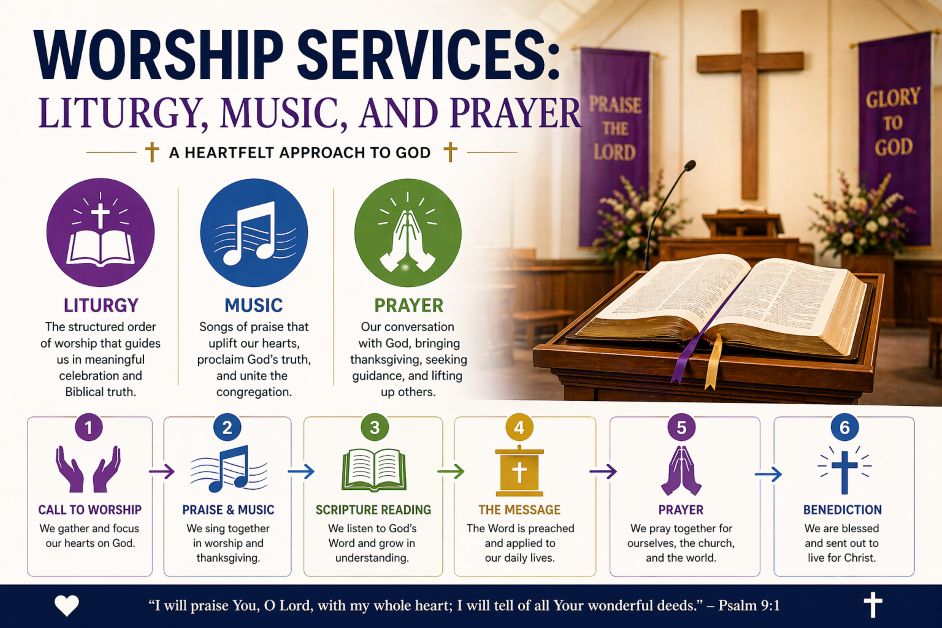
Understanding Worship Services: Liturgy, Music, and Prayer helps you move from simply attending to truly engaging with God. Many people attend church every week, but few fully understand what is happening during the service. When you look closely, every part of worship has a purpose.
In the African Methodist Episcopal Church tradition, worship is not random. It follows a meaningful structure that combines liturgy in worship services, church music and worship, and prayer in church services to create a complete spiritual experience. This guide explains how each part works and how they come together to strengthen faith.
What Are Worship Services? (Simple Explanation)
Worship services are gatherings where believers come together to honor God. These services include teaching, singing, and prayer.
Why Worship Matters in the Christian Life
- Builds a deeper connection with God
- Encourages spiritual growth
- Strengthens community
Studies show that regular worship participation increases emotional well-being and a sense of purpose.
Understanding Liturgy in Worship Services
The word “liturgy” may sound complex, but it simply means the order of worship.
What Is Liturgy?
Liturgy in worship services refers to the structured flow of a church service. It ensures that worship is organized and meaningful.
Common Elements of Liturgy
- Call to worship
- Scripture reading
- Sermon
- Offering
- Benediction
In AME churches, liturgy helps connect tradition with teaching, ensuring consistency across congregations.
The Role of Music in Worship Services
Music is one of the most powerful parts of worship.
Types of Worship Music
- Hymns (traditional songs)
- Contemporary praise songs
How Music Enhances Worship
Church music and worship:
- Engages emotions
- Encourages participation
- Helps people remember spiritual truths
Research shows music improves memory retention, making it easier to recall scripture and teachings.
The Power of Prayer in Worship Services
Prayer is central to every service.
Types of Prayer in Worship
- Opening prayer
- Intercessory prayer
- Closing prayer
Why Prayer Is Essential
Prayer in church services allows believers to:
- Communicate with God
- Seek guidance
- Express gratitude
Prayer connects every part of the service and brings spiritual focus.
How Liturgy, Music, and Prayer Work Together
These three elements are not separate; they work as one.
Creating a Complete Worship Experience
- Liturgy provides structure
- Music brings engagement
- Prayer creates connection
Balancing Structure and Spirit
A strong service blends order with spiritual freedom.
Encouraging Congregational Participation
Participation includes:
- Singing
- Listening
- Responding in prayer
Step-by-Step Structure of a Worship Service
Understanding the flow helps you engage more deeply.
Step 1 – Call to Worship
Invites the congregation to focus on God.
Step 2 – Opening Prayer
Sets the spiritual tone.
Step 3 – Praise and Music
Leads the congregation in worship through song.
Step 4 – Scripture Reading
Shares God’s Word.
Step 5 – Sermon
Provides teaching and application.
Step 6 – Closing Prayer and Benediction
Ends the service with a blessing and guidance.
Traditional vs Modern Worship Services
Churches may vary in style, but the purpose remains the same.
Traditional Liturgy-Based Worship
- Structured format
- Hymns and formal prayers
Contemporary Worship Style
- Flexible structure
- Modern music
Finding the Right Balance
Many churches combine both styles to meet the needs of all members.
The Role of the Congregation in Worship
Worship is not just for leaders; it involves everyone.
Singing and Engagement
Active participation strengthens the experience.
Listening and Reflection
Understanding the message is key.
Active Prayer Participation
Joining in prayer deepens connection with God.
Tips for Planning Effective Worship Services
This section is helpful for leaders and teachers.
Keep the Service Structured
Follow a clear order using liturgy in worship services.
Choose Meaningful Music
Select songs that match the message.
Focus on Clear Prayer
Ensure prayers are purposeful and relevant.
Benefits of Well-Structured Worship
Following Worship Services: Liturgy, Music, and Prayer lead to:
- Stronger spiritual connection
- Higher engagement
- Better understanding of faith
Churches with structured worship report higher member participation and retention.
Frequently Asked Questions (FAQs)
What is the purpose of liturgy in worship services?
Liturgy provides structure and ensures that each part of worship has meaning.
Why is music important in church worship?
Music engages emotions and helps people connect with God.
How does prayer fit into worship services?
Prayer connects every part of the service and focuses the congregation on God.
What are the main parts of a worship service?
Call to worship, prayer, music, scripture, sermon, and closing blessing.
Can worship services be both traditional and modern?
Yes. Many churches blend both styles for a balanced experience.
Experience Worship More Deeply
Understanding Worship Services: Liturgy, Music, and Prayer changes how you experience church. You move from watching to participating.
Each part liturgy, music, and prayer has a purpose. Together, they create a meaningful and powerful worship experience.
Take the next step today:
- Attend your next service with a new understanding
- Participate actively in music and prayer
- Share this guide with others
If this helped you, leave a comment or share your worship experience.

0 Comments